If you’re starting a podcast, YouTube channel, or home recording setup, your audio interface is the real foundation of your sound.
It’s what controls:
- 🎤 how clean your microphone sounds
- 🎧 how much noise you pick up
- ⚡ how easy your setup is to use daily
The good news: beginner interfaces in 2026 are genuinely excellent. Even budget models now have clean preamps, low latency, and plug-and-play USB-C setups.
Here are the best beginner-friendly audio interfaces worth buying right now.
🏆 Best Overall Beginner Interface
🎛️ Focusrite Scarlett Solo (4th Gen)
The Scarlett Solo is still the default “first interface” for most creators — and for good reason.
Why it stands out:
- Extremely easy setup (plug and record)
- Clean, low-noise preamps
- “Air mode” adds vocal presence boost
- Built-in gain staging tools (Auto Gain / Clip Safe)
It’s simple, reliable, and just works — especially for solo podcast setups.
💡 Best for: solo podcasters, beginners, voice recording

🎧 Best Value Upgrade Interface
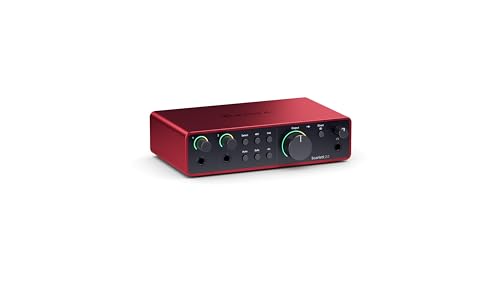
🎛️ Focusrite Scarlett 2i2 (4th Gen)
If you want room to grow, this is the sweet spot.
Why it’s better:
- Two mic inputs (interviews, co-hosts, guests)
- Stronger gain range for dynamic mics
- Improved monitoring and headroom
- Same beginner-friendly workflow
This is the interface most people upgrade to after a few months — but it’s also a great starting point if you can afford it.
💡 Best for: podcasts with guests, long-term setups, content creators
🎙️ Best Sound Quality Under Budget
🎛️ Audient iD4 MKII
This is the “audio purist” choice in the beginner category.
Why people love it:
- Very clean, detailed preamps
- Higher-end converter quality than most budget interfaces
- Simple layout with great monitoring control
- Slightly more “studio” sound than Scarlett line
It doesn’t add coloring or effects — it just records your mic accurately.
💡 Best for: voiceovers, clean vocal recording, home studios

🎧 Best Ultra-Budget Beginner Interface
🎛️ Behringer UMC22
This is the cheapest “real” XLR interface that still gets the job done.
Why it’s here:
- Very low entry price
- Basic but functional preamp
- Works with most XLR dynamic mics
- Gets you into XLR without overthinking
Tradeoff: more noise than higher-end models, but still usable for starting out.
💡 Best for: ultra-budget setups, testing podcasting, beginners unsure about investing

🎙️ Best Feature-Packed Beginner Interface
🎛️ PreSonus AudioBox USB 96
A solid “all-in-one beginner box” that includes useful workflow features.
Why it’s useful:
- MIDI support (rare at this price)
- Durable build
- Simple monitoring controls
- Includes recording software bundle
Not the cleanest preamps, but very practical for multi-use creators.
💡 Best for: musicians + podcasters, flexible beginner studios

📊 Quick Comparison
| Interface | Inputs | Strength | Weakness |
|---|---|---|---|
| Scarlett Solo (4th Gen) | 1 | Easiest setup + clean sound | Single mic only |
| Scarlett 2i2 (4th Gen) | 2 | Best all-round beginner choice | Slightly higher cost |
| Audient iD4 MKII | 1 | Best audio clarity | No second mic input |
| Behringer UMC22 | 1 | Cheapest entry point | More noise floor |
| PreSonus AudioBox | 2 | Feature-rich budget option | Average preamps |
🎯 Final Take
If you’re choosing your first interface, here’s the simplest breakdown:
- 🏆 Best overall: Scarlett Solo (simple + reliable)
- 🎙️ Best long-term pick: Scarlett 2i2
- 🎧 Best sound quality: Audient iD4 MKII
- 💸 Cheapest entry point: Behringer UMC22
- 🎛️ Most features: PreSonus AudioBox
🔥 Real-world truth
At the beginner level, the interface doesn’t just “change your sound” — it mostly affects:
- noise floor
- gain control
- stability (drivers + latency)
Meaning: a good interface won’t magically make you sound professional — but a bad one will definitely hold you back.