
AKG recently overhauled its entry-level lineup, replacing the aging Perception series (like the P120 and P420) with a sleek, vintage-inspired collection: the AKG C104 and AKG C114.
Borrowing the distinct silhouette of the legendary, high-end C414 family, these mics bring premium studio aesthetics down to earth. But for podcasters, voice actors, and creators working in home studios, which one actually deserves a spot on your boom arm?
Let’s break down the technical differences, the sonic profiles, and the real-world value to see which mic makes the most sense for your voice.
Head-to-Head Comparison
While they share an identical, elongated metal body made from recycled materials, what’s happening under the hood—and inside the box—is entirely different.
| Feature | AKG C104 | AKG C114 |
| Price | $129 | $229 |
| Capsule Type | 22mm Electret Condenser | 26mm True Condenser (Edge-terminated) |
| Polar Patterns | Cardioid Only | Cardioid, Omnidirectional, Figure-8 |
| Frequency Range | 20 Hz – 20 kHz | 20 Hz – 20 kHz |
| Max SPL | 143 dB | 145 dB |
| Self-Noise | 14 dB (A-weighted) | 12 dB (A-weighted) |
| Included Mount | Hard-mount screw attachment | Open-front cradle shock mount |
The Key Differences Explained
1. The Capsule Design & Core Tone
The C104 is a fixed-cardioid electret design using a mid-sized 22mm capsule. Sonically, it is dialed in specifically for spoken word and content creation. It delivers a modern, presence-forward tone with a bright, open high end and a remarkably rich, forgiving proximity effect. If you like to get right up on the mic for that deep “radio host” resonance, the C104 holds its low end firm without turning muddy.
The C114 steps up to a true, 26mm dual-diaphragm, edge-terminated capsule inspired by AKG’s classic CK12 architecture. Because it’s an externally polarized true condenser, its top end is a bit smoother and more extended, trading the sharp presence peak of the C104 for a more balanced, natural “air.” It also boasts slightly lower self-noise (12 dB vs 14 dB), giving you a cleaner noise floor if your recording space is quiet.
2. Versatility vs. Simplicity
The C104 is a pure “plug in and talk” utility microphone. There are zero switches on the body.
The C114 features a three-way toggle switch right under the grille to cycle between Cardioid, Omni, and Figure-8 patterns. While cardioid is the default choice for solo podcasting, having a Figure-8 pattern is incredibly useful if you host face-to-face interviews across a small desk with a single microphone, or if you want to completely reject sound from the sides.
3. Out-of-the-Box Value
At $129, the C104 is exceptionally budget-friendly, but it only ships with a basic, hard-mount stand adapter that screws into the bottom. To prevent desk bumps and floor vibrations from hitting your audio, you will likely need to budget for an aftermarket shock mount.
The $229 C114 is $100 more expensive, but it completely closes the value gap by including a high-quality, custom open-front cradle shock mount.
The Verdict: Which One Should You Buy?
Both microphones represent a huge step forward for AKG’s budget tier, ditching the sterile tone of older entry-level condensers for a smoother, highly compressible character.
Choose the AKG C104 if…
You want a dedicated, no-nonsense vocal microphone for solo podcasting, live streaming, or casual voice-over. Its native presence peak helps speech cut through a mix beautifully without requiring heavy EQ, and at $129, the price-to-performance ratio is tough to beat.
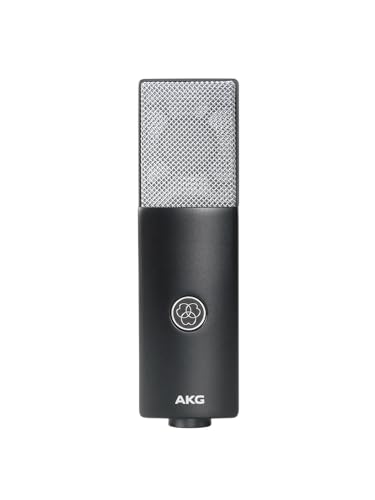
Choose the AKG C114 if…
You want a flexible studio workhorse. If you plan to record multi-person interviews, dabble in acoustic instruments, or simply want a smoother, less hyped top-end with lower native noise, the C114 is well worth the extra $100—especially when you factor in the included professional shock mount.
