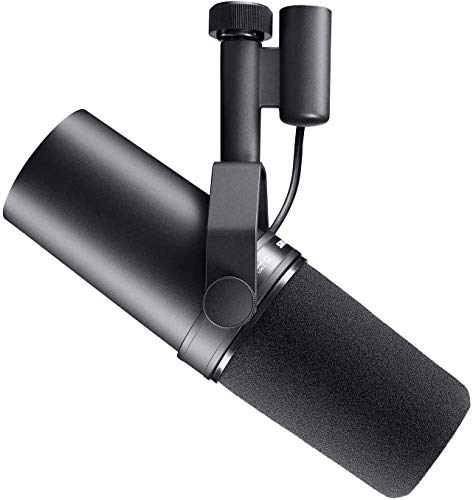
For years, buying a Shure SM7B came with an unwritten tax. Because this legendary dynamic microphone outputs an incredibly quiet signal, you couldn’t just plug it into a standard audio interface. You almost always had to buy a $150 inline preamp (like a Cloudlifter) just to get enough clean volume.
Shure finally answered the collective groans of bedroom podcasters by releasing the Shure SM7dB.
At first glance, it looks identical to the original. But on the back, everything changes. Let’s break down the physical differences, the performance data, and exactly which one you should buy for your PodGearLab studio.
|

|
|
$395.00
|
$494.00
|
The Core Difference: Built-In Power
The “dB” in SM7dB stands for decibels, and it brings a massive structural upgrade: a built-in, custom preamp designed by Shure.
When you flip the SM7dB over, you can clearly see the physical layout differences compared to the legacy model:
Look closely at the rear panels above. The classic SM7B on the left features only two basic frequency response switches (bass rolloff and presence boost).
The SM7dB on the right keeps those exact same tone switches but adds a dedicated bottom row of hardware toggles. These control a built-in preamp that can inject either +18 dB or +25 dB of pure, transparent gain directly into your signal chain. It also includes a bypass switch if you ever want to turn the preamp completely off and run it as a traditional, passive SM7B.
Side-by-Side Comparison
| Feature | Shure SM7B | Shure SM7dB |
| Price | ~$399 | ~$499 |
| Microphone Type | Dynamic (Passive) | Dynamic (Active / Bypassable) |
| Requires Phantom Power? | No | Yes (to power the internal preamp) |
| Built-in Gain | None | +18 dB or +25 dB |
| Physical Length | 7.48 inches | 8.12 inches (slightly longer body) |
| Sound Capsule | Unidyne III | Unidyne III (Identical sound profile) |
Head-to-Head Performance Breakdown
1. The Sound Quality (It’s a Tie)
If you turn off the internal preamp on the SM7dB, it sounds identical to the classic SM7B. They use the exact same Unidyne III capsule design. You get that same thick, warm broadcast tone with incredible off-axis rejection that tames noisy, untreated rooms.
2. Cable and Gear Setup Simplification
With the original SM7B, your gear chain requires an extra XLR cable and an external box dangling from your boom arm. The SM7dB eliminates all that clutter. You run a single XLR cable straight from the mic into your interface.
Important Note: To use the SM7dB’s built-in boost, you must turn on +48V Phantom Power on your audio interface. Don’t worry—this won’t damage the dynamic capsule; it only feeds the internal preamp.
3. The Math: Which is Actually Cheaper?
- The SM7B Route: The microphone costs $399. A Cloudlifter CL-1 costs roughly $150. An extra 3-foot XLR cable costs $15. Total: ~$564.
- The SM7dB Route: The microphone costs $499. You do not need an external preamp or an extra cable. Total: ~$499.
If you don’t already own a high-end audio interface with powerful internal preamps (like a Rødecaster Pro or an Apollo Twin), buying the SM7dB actually saves you around $65.
The PodGearLab Verdict
- Buy the Shure SM7dB if: You are building a studio from scratch or use a mid-range audio interface (like a Focusrite Scarlett 2i2 or Volt 2). It saves you money, cuts out desktop cable clutter, and sounds flawless.
- Buy the Shure SM7B if: You already own an inline preamp like a Cloudlifter, or you use a premium broadcast mixer with plenty of native gain (60 dB or greater) built straight into the console.