
For years, Elgato ruled the desktop audio space with their Wave:3 USB microphone and the highly versatile Wave Link software. But as creators scale up, they inevitably look toward XLR setups. Enter the Elgato Wave DX—a sleek, zero-fuss $99 dynamic microphone built specifically to transition USB users into the pro-audio ecosystem without the massive price tag.
Developed in close collaboration with premium microphone manufacturer Lewitt Audio, the Wave DX aims to provide the best of both worlds: the room-noise rejection of a classic dynamic mic, but with the top-end detail usually reserved for condensers.
The Core Specs
| Feature | Specification |
| Capsule Type | Dynamic (Engineered by Lewitt) |
| Polar Pattern | Cardioid |
| Frequency Response | 50 Hz – 15 kHz |
| Sensitivity | 2.5 mV/Pa (-52 dBV/Pa) |
| Impedance | 600 Ohm |
| Connection | 3-pin XLR (No Phantom Power Required) |
| Price | $99 |
Design and Smart Workspace Integration
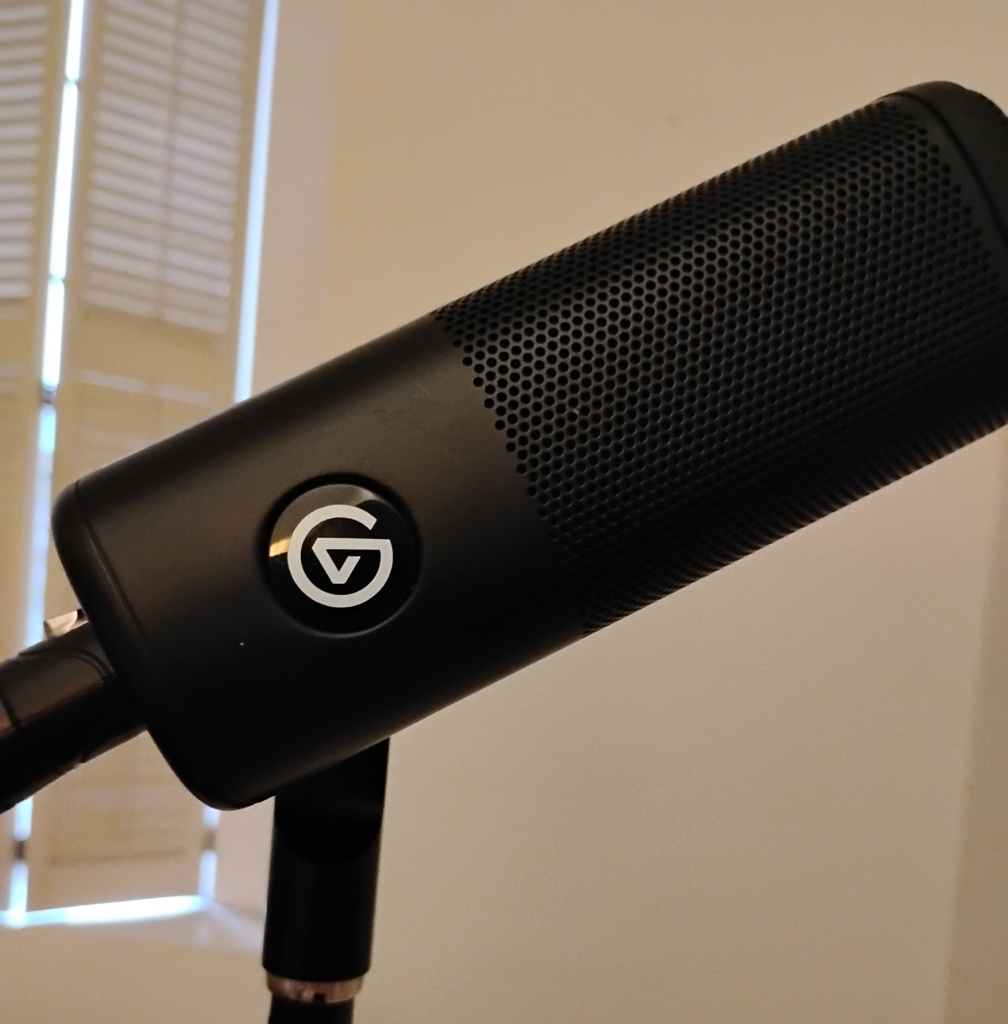
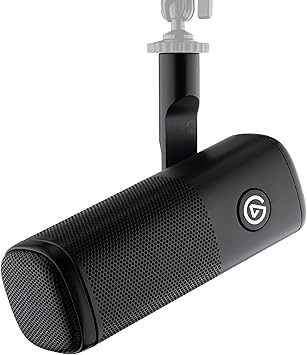
The Wave DX features a minimalist, blocky, hardened steel chassis that looks incredibly sharp on camera. It ditches the chunky, traditional shock mounts that take up half the screen. Instead, it relies on an integrated mono swivel mount attached to the side of the housing.
Because the mount is fixed to a single side swing-arm, you can rotate the mic freely without jamming or pinching your XLR cable at the base—a small but brilliant quality-of-life win for tight desktop setups. Even better for aesthetic-conscious streamers: the Elgato logo plate can be popped off and flipped so it’s never upside down on stream, regardless of which side you mount it from.
Internal Protection: The mic completely seals its pop protection inside the capsule head. It uses an acoustically engineered nylon fiber layer sandwiched between two layers of foam, keeping the external aesthetic entirely clean without needing a bulky foam windscreen.
Performance: Sound Quality & Software Synergy
Dynamic microphones are loved by home creators because they focus on your voice and ignore the background chaos—like mechanical keyboards, system fans, or bad room acoustics. The Wave DX handles this beautifully, but with a unique tonal twist.
1. The “Condenser-Like” Top End
Thanks to Lewitt’s capsule tuning, the Wave DX doesn’t suffer from the dark, muddy high-end drop-off typical of many budget dynamic mics (like the Shure SM58). It has a brilliant presence boost that captures transient speech details and crisp vocal articulation cleanly.
2. Forgiving Off-Axis Rejection
While its cardioid pattern is focused, it’s surprisingly forgiving. If you turn your head slightly to look at a secondary monitor or chat window, your volume doesn’t instantly drop off a cliff. It holds your voice steady even when you move slightly off-axis.
3. The Power Advantage
Unlike notorious gain-hogs like the Shure SM7B, the Wave DX is relatively high-output for a dynamic mic (-52 dBV). You do not need a hardware inline booster (like a Cloudlifter) to use this mic. Any standard budget audio interface or podcast mixer can drive it cleanly.
The Catch: The “Ecosystem Tax”
While the microphone itself is an incredible value at $99, it is completely bare-bones. It ships with the swivel mount and a couple of thread adapters—that’s it. There is no included XLR cable, no desk stand, and no interface.
To unlock the true magic of the Wave DX—specifically Elgato’s Wave Link virtual mixing software and proprietary digital Clipguard (anti-distortion)—you really need to pair it with the Elgato Wave XLR interface ($160). If you already own a standard interface (like a Focusrite Scarlett), the Wave DX functions perfectly as a standard analog mic, but you lose out on the deep software integration that sets Elgato apart.
Pros & Cons
The Good
- Crisp Vocal Clarity: Lewitt-engineered capsule provides excellent top-end detail.
- No Booster Needed: Strong enough output to run on basic preamps without a Cloudlifter.
- Camera-Ready Design: Minimal footprint, smart cable management, and rotatable branding.
- Excellent Built-In Plosive Control: Internal pop shield handles heavy $P$ and $B$ sounds effortlessly.
The Bad
- Zero Accessories: No XLR cable or stand included in the box.
- Software Locked: Requires an Elgato Wave interface to access the powerful Wave Link suite.
The PodGearLab Verdict: Should You Buy It?
If you are a podcaster or streamer who already lives in the Elgato ecosystem (or plans to buy the Wave XLR interface), the Elgato Wave DX is a no-brainer transition mic. It cleans up your desk aesthetic, ignores your background room reflections, and delivers a highly professional, modern vocal tone for just under a hundred bucks.
However, if you already own a traditional audio interface and have no intention of using Elgato’s software, competitors like the Røde PodMic offer a slightly heavier, more rugged build for the exact same price tier.